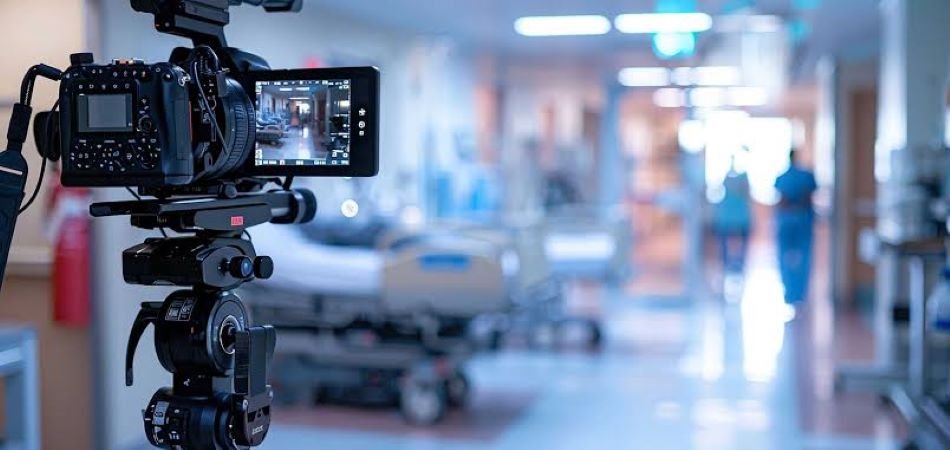
Trust is the foundation of healthcare. Patients often seek to understand whom they will be interacting with and what outcomes to anticipate before choosing a doctor, visiting a clinic, or considering a treatment. This is one reason why healthcare video production has become increasingly significant as a communication method for medical practices, clinics, hospitals, pharmaceutical companies, and healthcare brands.
A quality healthcare film could depict a facility, tackle frequent patient questions, guide viewers through a challenging process, or provide useful health insights. Most importantly, it can communicate information in a warm and friendly manner.
What Is Healthcare Video Production?

Healthcare video production refers to the process of creating, planning, filming, editing, and distributing video content tailored specifically for the healthcare industry. Healthcare projects, unlike standard commercial video production, require heightened attention to medical accuracy, patient confidentiality, ethical issues, accessibility, and compliance with regulations.
Healthcare videos can include:
- Patient education videos
- Doctor and specialist interviews
- Hospital and clinic introductions
- Treatment and procedure explainers
- Patient testimonials
- Healthcare advertising videos
- Medical animation
- Staff training videos
- Public health campaigns
- Pharmaceutical and medical-device videos
- Social media health content
- Facility tours
With a clear objective in mind, the most successful projects begin. A promotional video introducing a new clinic should not be compared to a video designed to explain a surgical procedure.
Types of Healthcare Videos
1. Patient Education Videos
One of the most useful uses for healthcare video production is patient education.
These videos can explain:
- Symptoms of a condition
- Treatment options
- Preparation for a procedure
- Recovery instructions
- Medication information
- Lifestyle recommendations
- When a patient should seek professional care
The language ought to be clear and concise. Healthcare organizations can make a series of short videos that each address a specific question, rather than trying to cover everything about a disease in one video.
2. Doctor Introduction Videos
When patients are uncertain about what to expect during procedures, it can be unsettling. The process can be described by a procedure explainer utilizing interviews, live footage, illustrations, motion graphics, or medical animation. The goal should be clarity, not unnecessary complexity.
3. Medical Procedure Explainers
When patients are uncertain about what to expect during procedures, it can be unsettling. The process can be described by a procedure explainer utilizing interviews, live footage, illustrations, motion graphics, or medical animation. The goal should be clarity, not unnecessary complexity.
4. Patient Testimonial Videos
Narratives from actual patients can illustrate the personal aspect of healthcare. A testimonial can illustrate a patient’s interaction with a healthcare team, institution, therapy, or healing process. Nevertheless, healthcare institutions must acquire proper consent and manage patient data with care.
The most powerful testimonials typically seem genuine instead of overly rehearsed.
5. Hospital and Clinic Videos
A facility video can introduce patients to the environment before their first visit.
It might show:
- Reception areas
- Treatment rooms
- Diagnostic facilities
- Staff members
- Patient services
- Waiting areas
- Specialized equipment
For someone who has never visited the facility, this visual introduction can make the experience feel more familiar.
6. Medical Animation
Some medical subjects are difficult to film because they happen inside the body or involve complex biological processes.
The Healthcare Video Production Process
Professional healthcare video production normally begins long before the cameras are turned on.
Step 1: Define the Objective
The first question should be, “What should the viewer understand or do after watching the video?”
A clear objective helps determine the script, length, visuals, presenter, and distribution channel.
Step 2: Identify the Audience
A video for medical professionals will have different language and visual requirements from a video designed for patients.
Consider:
- Age group
- Health literacy
- Language
- Cultural background
- Medical knowledge
- Viewing platform
Understanding the audience makes the final content more relevant.
Step 3: Develop the Script
Medical content must undergo assessment by a certified healthcare expert prior to publication. The script must steer clear of pointless jargon and concentrate on a single primary message.
A coherent framework consists of issue, clarification, guidance, and following action. This provides audiences with a rational flow of information.
Step 4: Plan the Visuals
Healthcare videos do not have to consist entirely of someone speaking into a camera.
Production can combine:
- Interviews
- B-roll
- Medical illustrations
- Motion graphics
- Animation
- On-screen text
- Diagrams
- Facility footage
Visual variety can make complicated subjects easier to follow.
Step 5: Film
The setting, illumination, audio, and framing all influence the professionalism of a healthcare video. Nonetheless, the quality of production ought to enhance the message instead of diverting attention from it. If the healthcare details are ambiguous, a refined video serves no purpose.
Step 6: Clinical and Compliance Review
This is an especially important stage.
Before publication, the organization should review the video for:
- Medical accuracy
- Patient privacy
- Consent
- Claims and supporting evidence
- Brand requirements
- Applicable advertising regulations
- Accessibility
Healthcare communication carries greater responsibility than ordinary promotional content because viewers may use the information when making decisions about their health.
Step 7: Edit and Distribute
The completed video can be adjusted for different platforms. For example, a longer educational video could be paired with shorter segments for social media, an embedded version on a website, and captioned content for patients who choose not to listen to the video.
Making Healthcare Videos More Accessible
Accessibility should be considered during production rather than added as an afterthought.
Useful practices include:
- Accurate captions
- Clear narration
- Readable on-screen text
- Sufficient visual contrast
- Plain-language explanations
- Translations where appropriate
- Descriptive visual information when needed
For healthcare organizations serving multilingual communities, translated subtitles and localized versions can make important information available to a wider audience.
Privacy and Patient Consent
A key component of healthcare video production is protecting patient privacy. Prior to recording, organizations need to implement a suitable consent process for patients featured in a video. Moreover, teams must refrain from inadvertently showcasing patient charts, whiteboards, computer displays, or other background items that hold confidential medical details. When needed, the production team must work alongside privacy and compliance experts from the healthcare organization.
How Healthcare Organizations Can Measure Video Success
Video views alone do not tell the entire story.
Depending on the video’s purpose, useful measurements can include:
- Watch time
- Completion rate
- Patient engagement
- Website visits
- Appointment inquiries
- Patient feedback
- Knowledge improvement
- Downloads or resource usage
- Social engagement
- Conversion rates
For educational content, understanding may be more important than simply maximizing views.
The Future of Healthcare Video Production
Healthcare video production is evolving towards content that is more personalized, accessible, and reusable.
Organizations can develop content libraries focused on the most common inquiries from patients instead of producing one extensive video and releasing it all at once.
For example, a hospital might create a collection covering:
- Preparing for an appointment
- What to expect during a procedure
- Frequently asked questions
- Recovery instructions
- Follow-up care
- Warning signs that require professional attention
This approach could change video production into a tool for continuous patient communication instead of a singular marketing effort. New production technologies and artificial intelligence may also speed up localization, editing, animation, and content adaptation. Nonetheless, technology ought to enhance—not substitute—for clinical evaluation, expert judgment, privacy safeguarding, and human supervision.
Final Thoughts
Healthcare video creation can enhance medical communication by making it clearer, more accessible, and more engaging. Video offers healthcare organizations an additional way to connect with the individuals they serve, including doctor introductions, facility tours, patient education, and procedure explanations.
The priciest healthcare videos might not necessarily be the most effective. They possess a suitable clinical assessment, accurate details, deliberate narratives, and a distinct aim. Content that goes beyond merely advertising a service can enhance people’s understanding of healthcare with more assurance when healthcare organizations merge medical knowledge with skilled video production.