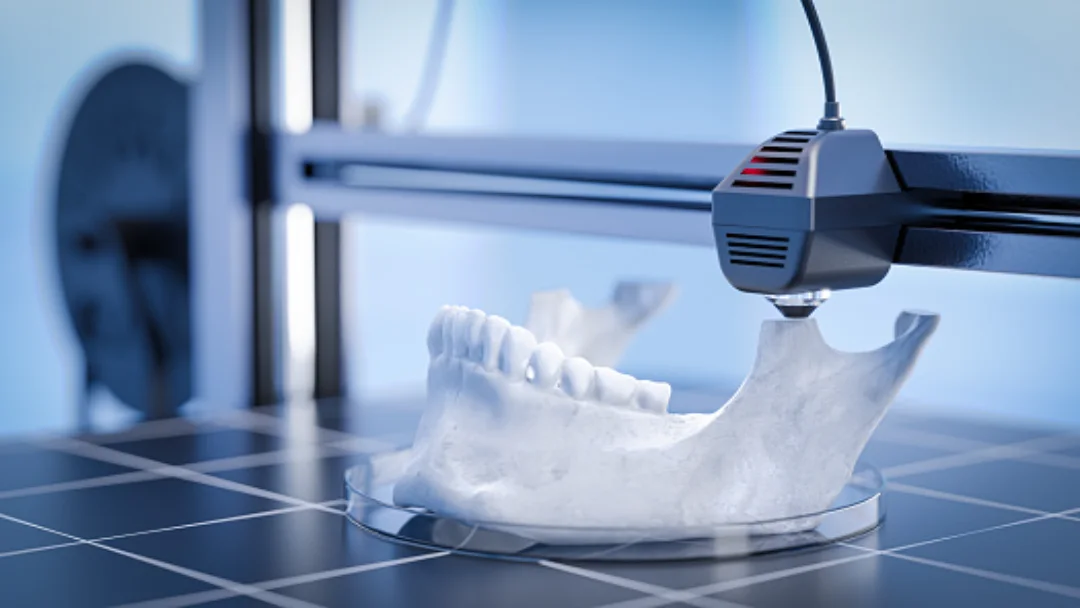
The way medical professionals think about treatment planning, surgical preparation, prosthetics, implants, and medical education is changing thanks to medical 3D printing. This technology enables specialists to create highly detailed models and, in some applications, patient-specific medical products by converting digital designs into physical three-dimensional objects. What was once thought to be futuristic technology is now being used in a variety of healthcare settings. Medical 3D printing is being investigated by medical technology companies, universities, research facilities, and hospitals to enhance precision, customization, and efficiency.
What Is Medical 3D Printing?
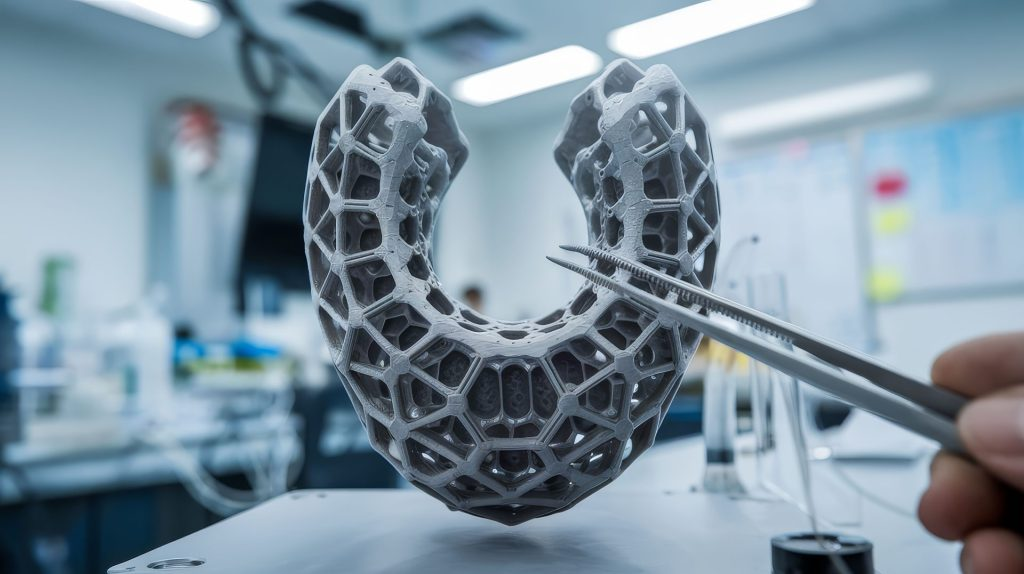
Medical 3D printing is the process of producing three-dimensional objects from digital medical data or computer-generated designs. A printer builds the object layer by layer using materials selected for the intended application.
Anatomical information can be provided in great detail by means of patient imaging technologies like CT and MRI scans. This data can be turned into a digital three-dimensional model of a specific anatomical structure with the right processing. The final print can be used as a surgical planning model, an educational tool, a prosthetic component, an implant-related product, or a research model, depending on the purpose.
How Does Medical 3D Printing Work?
Digital data typically serve as the foundation for the process. Medical imaging data can be transformed into a three-dimensional representation of the relevant anatomy for patient-specific applications. Then, specialized software is used to prepare the digital model. The model can be modified, removed from unnecessary information, and prepared for printing by designers or medical professionals. The object is produced by the 3D printer layer by layer once the design is complete. Plastics, resins, metals, and other specialized materials are among the materials and printing methods utilized by various technologies. Depending on its intended use, the printed object may require cleaning, curing, machining, sterilization, inspection, or other finishing steps.
Applications of Medical 3D Printing
Medical 3D printing has applications across numerous healthcare fields.
Surgical Planning
The development of anatomical models for the purpose of surgical planning is one of the most useful applications. Surgeons can examine a physical representation of complex anatomy before a procedure.
Before entering the operating room, the surgical team may be able to better comprehend the individual anatomy of the patient with the assistance of a comprehensive model.
Customized Prosthetics
Additionally, 3D printing can assist in the creation of individualized prosthetic devices. Manufacturers are able to produce components that are tailored to the requirements of a patient because digital designs can be adjusted to individual measurements. Personalization has the potential to enhance comfort, fit, and appearance for some patients.
Dental Applications
Dentistry has emerged as a significant application for 3D printing. Models, surgical guides, orthodontic appliances, dentures, and other dental products can be made using digital dental workflows. Dental professionals may be able to benefit from the technology by moving away from using actual impressions and toward increasingly digital production processes.
Medical Education
The complexity of human anatomy cannot always be conveyed through two-dimensional illustrations or traditional textbooks. Printing three-dimensional models provides students with real-world objects they can examine from a variety of perspectives. These models can be used to support anatomy instruction and procedural training at medical schools and training facilities.
Anatomical Replicas
Sometimes, the particular anatomy of a patient can be recreated as a physical model. These replicas can be used by doctors to study complex conditions or unusual anatomical structures prior to treatment. Healthcare professionals may also find it easier to explain medical conditions and proposed procedures to patients and their families using these models.
Implant Development
For a variety of implant-related applications, 3D printing is being investigated by researchers. The capacity to create intricate geometries can provide design options that are challenging to achieve through conventional manufacturing techniques. However, strict evaluation, the right materials, manufacturing controls, and regulatory oversight are necessary for medical implants that are intended for use inside the body.
Benefits of Medical 3D Printing
The growing interest in medical 3D printing comes from several potential advantages.
Personalization
The medical field is increasingly moving toward personalized care for each patient. By allowing digital designs to be altered in accordance with distinct anatomical measurements, 3D printing contributes to this trend.
Complex Designs
Some 3D printing technologies can make internal structures and shapes that would be hard to make or expensive to make using traditional methods.
Faster Prototyping
Prototypes can be made quickly, evaluated, changed in design, and revised by researchers and manufacturers of medical devices.
Better Visualization
Information that can’t be seen with just traditional medical images can be provided by a physical three-dimensional model.
Potential Cost Efficiency
Additive manufacturing has the potential to simplify the production of customized components and reduce material waste in certain applications. The printer, materials, labor, post-processing, regulatory requirements, and production volume all influence cost savings.
Materials Used in Medical 3D Printing
The choice of printing material depends heavily on the intended application.
Common categories include:
- Medical-grade polymers
- Resins
- Thermoplastic materials
- Titanium and other metals
- Ceramic-based materials
- Specialized experimental biomaterials
Materials used in educational models must meet significantly higher standards than those used in patient-contact or implantable applications. The emerging field of bioprinting, which investigates the use of living cells and biomaterials to create tissue-like structures, is also being studied by researchers.
What Is Bioprinting?
Bioprinting is a subfield of 3D printing that focuses on using cells, biological materials, or bioinks. The development of structures that may facilitate tissue engineering and regenerative medicine is the long-term objective. Bioprinting, in contrast to printing a plastic anatomical model, involves challenging biological issues. Structures need the right properties, cells need to stay viable, and the tissue that comes out of it needs to work right with the body. Even though research is moving forward, numerous ambitious applications of bioprinting are still in the research stage and are not yet routinely used in medicine.
Challenges of Medical 3D Printing
Despite its potential, medical 3D printing has important limitations.
Regulatory Requirements
Medical products must adhere to all relevant safety and legal requirements. Extensive testing and documentation may be necessary for implantable products and patient-specific devices.
Quality Control
Small variations can have small variations. For this reason, consistent quality control is crucial.
Material Limitations
There are not all medical uses for every material. Materials with the right combination of strength, durability, compatibility, and manufacturing characteristics are still the subject of research.
Cost and Expertise
Specialized printers, software, materials, well-trained personnel, and quality management systems are all necessary for medical 3D printing. Smaller healthcare organizations may find it challenging to adopt these requirements.
Data Security
Digital files and medical imaging are frequently used in patient-specific 3D printing. A responsible workflow includes controlling access to sensitive medical data and protecting patient information.
The Future of Medical 3D Printing
Advances in medical imaging, artificial intelligence, materials science, robotics, and digital healthcare are all closely linked to the future of medical 3D printing. Healthcare professionals may gain more effective tools for personalized planning and manufacturing as software gets better at interpreting medical data and making accurate models.
Advanced bioprinting methods, smart biomaterials, and advanced tissue engineering are also being investigated by researchers. These developments may broaden the application of additive manufacturing to medical research and regenerative medicine. However, clinical evidence, safety testing, regulatory compliance, and responsible implementation must accompany technological advancement.
Conclusion
Because it combines digital medical data with physical manufacturing, medical 3D printing is a significant advancement in modern healthcare. The technology provides numerous opportunities for personalization and innovation, ranging from customized prosthetics and advanced research to surgical models, dental products, and advanced surgical models. Instead of relying solely on standard products, its capacity to satisfy individual requirements may be its greatest asset. 3D printing is likely to continue to be a significant area of healthcare innovation as printing technologies, materials, software, and medical research continue to advance. The technology looks promising, but it can only be used responsibly with careful validation, the right materials, quality control, and clinical practice based on evidence.